

Block Buster - No Timer
Lion Studios Plus
Block Buster - No Timer is the kind of puzzle game I reach for when I want something simple to understand but still satisfying to solve. It is a free block puzzle for Android, made by Lion Studios Plus, and the basic idea is immediately approachable: arrange colorful pieces, clear bricks, and keep thinking ahead. I found the experience easy to start without a tutorial-heavy introduction, which matters when I only have a few spare minutes.
What makes it stand out for me is the absence of a countdown pressure in its name and presentation. That changes the mood compared with faster puzzle games. I can pause to inspect the board, consider where a shape will fit, and make a choice without feeling pushed into a reflex move. It is still a game about planning, but it feels more like a quiet mental exercise than a race.
How Block Buster - No Timer handles different players and situations
Readable boards and straightforward navigation
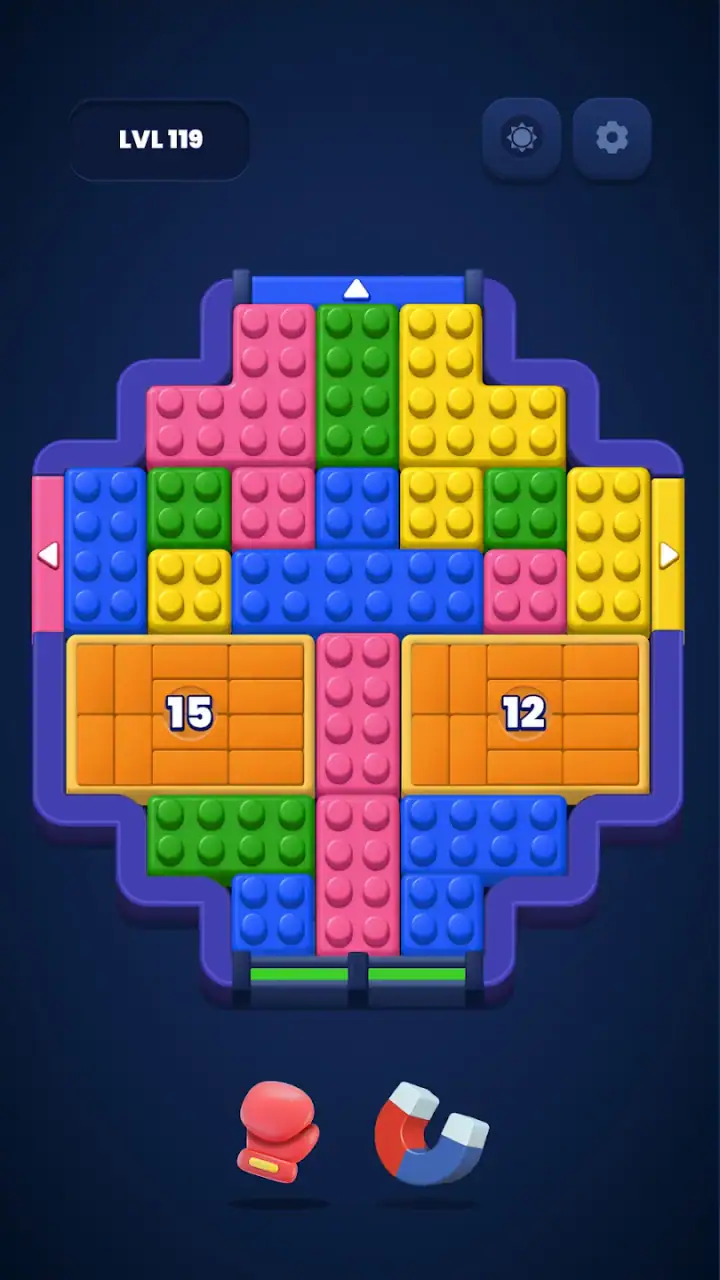
The visual language is one of the strongest parts of the game. Blocks use bright colors and clear shapes, so the board communicates its basic state quickly. I do not have to learn a complicated set of symbols before I can play. For someone who prefers direct interfaces, that simplicity is helpful: the puzzle itself remains the main focus instead of menus, instructions, or decorative screens.
The game’s puzzle format also reduces the amount of navigation required. A player can concentrate on the current arrangement rather than moving through several layers of options. That is useful for younger players, casual users, and anyone who finds busy game interfaces tiring. The Everyone content rating reflects how broadly approachable the concept is, although an age rating should not be confused with a promise that every player will find the visual presentation equally comfortable.
I especially like that the board invites a quick visual scan. Before placing anything, I can look for open spaces, possible lines, and awkward corners. This creates a natural rhythm: inspect, place, reassess. The game does not require me to memorize a long rule set, so the mental effort goes into spatial reasoning rather than remembering controls.
Related News

Threads in Real Life: Who Should Join, Lurk, or Leave

How SHEIN Turned Shopping Into an Endless Content Feed

How to Make Fortnite Feel Smarter on Mobile

Should You Switch to Microsoft Outlook on Mobile?

Why Gallery Keeps Pulling Users Back

X Review: Why Its Network Still Matters
That said, colorful design can be less clear for some players when several blocks have similar tones. Shape and position help, but color may still carry much of the visual distinction. If you rely heavily on color differences, I would try a few rounds before deciding whether the board remains comfortable to read. The game is visually friendly in general, but “bright and clear” will not mean the same thing for everyone.
Why the no-timer approach changes the experience
The no-timer angle is more than a small naming detail. It makes the game easier to fit around interruptions. I can begin a puzzle while waiting for a drink, stop when someone speaks to me, and return without having spent the whole session reacting to a clock. That makes it a better match for relaxed play than for people who want the adrenaline of a timed challenge.
In practical terms, the slower pace gives me room to use a repeatable method. I first check whether a move can complete a line, then consider which remaining spaces will be hardest to fill, and only after that place a piece. This is a useful habit because the most attractive immediate move is not always the safest one. Leaving a narrow gap or an isolated corner can make later pieces difficult to use.
Gallery
Players who have trouble processing information quickly may appreciate this breathing room, but the game still asks for visual attention and spatial judgment. Removing a timer does not remove every source of pressure. A crowded board can become mentally demanding, especially after several decisions. The difference is that the pressure comes from the puzzle position rather than from a visible countdown.
For experienced puzzle players, the relaxed format may feel too gentle. If your favorite alternatives are built around speed, streaks, or rapid reactions, this game may seem less exciting. I see it as a deliberate trade-off: less urgency in exchange for more time to reason.
Touch control, hand comfort, and sensory load
Touch-based block placement is easy to understand, but precision still matters. When a board contains several possible destinations, a small hand movement can change the result. I found it best to hold the device steadily and make deliberate taps or drags rather than rushing. That simple adjustment reduces accidental placements and makes the board feel more manageable.
This is an important distinction for players with limited fine-motor control. The absence of a timer helps because there is no need to hurry, yet the game still depends on accurate touch interaction. Someone who finds small targets difficult may experience frustration even if the rules are simple. A larger screen can make the board easier to inspect, while a smaller phone may demand more careful finger placement.
The bright blocks give the game a cheerful appearance, but players sensitive to strong colors or busy visual contrast may prefer shorter sessions. I would treat the game as something to adjust around personal comfort: lower the device brightness if needed, take breaks between rounds, and avoid playing when visual fatigue is already high. Those are practical habits rather than special game features, but they can make a noticeable difference.
Sound and other sensory details can also influence whether a puzzle feels relaxing or distracting. I would not choose this title solely for a quiet, minimalist atmosphere without first trying it in the way I normally play. Some people enjoy feedback while placing and clearing blocks; others prefer a silent session. The core puzzle remains understandable either way, but the overall comfort of play depends on your own sensory preferences and device settings.
Playing during short breaks, interruptions, and low-energy moments
A realistic use case is a short waiting period when I want more involvement than scrolling but less commitment than a full game session. I can open the puzzle, work through a few decisions, and put the phone away when my turn arrives. The lack of a timer is particularly useful in that situation because an interruption does not automatically turn into a failed attempt caused by lost seconds.
It also works well when I am mentally tired but still want a small challenge. The rules are light enough to avoid a long learning process, while the board gives me something concrete to think about. I would not describe it as effortless, though. When the arrangement becomes crowded, I still need to plan. That balance is why I find it more engaging than a purely passive distraction.
For children, the simple block concept can be approachable, and the Everyone rating makes the game broadly suitable in terms of content. Adults should still consider whether the child is comfortable with touch precision and bright visual feedback. A young player may understand the objective quickly but need help learning not to fill every available space immediately.
For older players or anyone who prefers a slower pace, the no-timer structure is a genuine advantage. It allows the player to examine the board without competing against reaction speed. However, comfort with the screen, visibility of the pieces, and touch accuracy remain personal factors. The game reduces one barrier—time pressure—but does not solve every possible interaction difficulty.
Useful habits for getting more from each board
My first practical tip is to protect flexible spaces. A large open area can accept many shapes, while a thin gap or corner may accept very few. Clearing a line feels rewarding, but I try not to sacrifice the board’s future flexibility just to make one quick removal. This makes the game feel more strategic and prevents the later board from becoming unnecessarily cramped.
My second tip is to pause after every clear rather than immediately placing the next piece. The board changes when blocks disappear, and a space that looked unhelpful can become valuable. Taking that extra moment is especially easy here because there is no timer pushing me forward. It also helps players who need more time to process a changing visual layout.
A third useful approach is to separate “possible” from “best.” A piece may fit in several locations, but the first legal placement is rarely automatically the strongest one. I look at the next available shapes, identify which one has the fewest comfortable homes, and reserve a suitable area for it. This turns a basic matching action into a small planning exercise.
I also recommend treating a near-full board as a warning rather than a reason to rush. When space is limited, I slow down and check whether a move creates an isolated pocket. That habit is more valuable than trying to play quickly. It is one of the reasons the game can support attention and logic practice without presenting itself as a formal brain-training tool.
Where it compares well with familiar puzzle alternatives
Compared with match-three games, this title puts more emphasis on spatial arrangement than on swapping neighboring items. I am not mainly searching for identical symbols; I am deciding how shapes should occupy a limited grid. That makes it a better choice for someone who enjoys visual planning and a less obvious choice for someone who wants chain reactions and constant animated rewards.
Compared with classic falling-block games, the no-timer structure feels calmer. Traditional falling pieces create urgency because the board changes while I am thinking. Here, the appeal is the opportunity to plan at my own pace. Players who love speed and quick rotation may miss that tension, while players who dislike being rushed may find this version much easier to approach.
Compared with daily puzzle formats, Block Buster - No Timer is more suitable for open-ended casual play. I can use it when the mood strikes rather than waiting for a particular challenge or trying to maintain a routine. The trade-off is that it may feel less goal-driven for people who enjoy a fixed daily target, a long-term progression system, or a strong sense of completion.
Its free entry point makes it easy to test without committing money at the start. The game includes optional in-app purchases, with individual items ranging from around two dollars to around two hundred dollars. That is a wide range, so I would advise checking each purchase carefully and using device purchase controls if the phone is shared with children. The free starting point is convenient, but optional spending is still part of the decision.
Remaining barriers worth considering before installing
The biggest limitation is that relaxed pacing does not guarantee universal ease of use. Players with motor difficulties may still struggle with accurate placement. Players with color-vision differences may find some block distinctions less immediate. Players sensitive to bright visuals may need shorter sessions or different device settings. These are not reasons to dismiss the game, but they are reasons to test it realistically rather than relying only on its simple rules.
Another limitation is the possibility of repetition. The core pleasure comes from arranging pieces and improving decisions, so anyone looking for a story, characters, or a broad variety of game modes may lose interest. I would choose it for compact puzzle sessions, not as a replacement for a larger adventure or strategy game.
The current version is 1.8.0, and the game requires Android 6.0 or later. That makes checking the phone’s software compatibility a sensible first step, especially on an older device. The title is listed with over half a million installs and an average rating of 4.5 from around twenty-one thousand ratings, which suggests that many players find the central experience appealing, but popularity cannot predict whether the touch targets or visual style will suit your particular needs.
Because it is a mobile puzzle, the quality of the experience can also depend on how and where you play. A stable grip, a comfortably sized display, and enough light to see the board clearly may matter more than expected. On a crowded commute, frequent movement can make precise placement harder. At home, the same puzzle may feel much more relaxed. The game supports flexible situations, but the physical context still shapes accessibility.
I would also skip it if your main requirement is a strong competitive environment. The appeal here is personal decision-making and unhurried play, not the pressure of comparing reaction times. Likewise, if you need extensive customization for visual or motor access, I would investigate the controls during the first session before investing much time. The straightforward design helps, but simplicity is not the same as comprehensive accessibility support.
My inclusive verdict on the overall experience
After spending time with Block Buster - No Timer, I see it as a thoughtful casual puzzle for players who want colorful spatial challenges without a countdown. Its clearest strength is the room it gives me to think. That benefits interrupted play, slower decision-making, and anyone who finds timed puzzles stressful. The uncomplicated board also makes the game easy to explain to a friend or family member.
Its limits are equally clear. Touch precision, visual contrast, and bright presentation may not suit everyone, and the basic format may not satisfy players who need variety, narrative, or competitive intensity. The optional purchase range also deserves attention, particularly on shared devices. I would approach the game as a free trial of a specific puzzle style rather than assuming it will meet every accessibility or entertainment preference.
For me, the best way to play is in short, deliberate sessions: keep the screen at a comfortable brightness, avoid rushing placements, protect open areas, and take a break when the board or colors begin to feel tiring. Those habits make the no-timer design work to its full advantage. They also reveal whether the game fits your own abilities instead of forcing you to adapt to a fast pace.
My recommendation is simple: try it if you want a calm block puzzle that rewards planning more than speed. I would recommend it to casual players, families looking for an approachable logic game, and anyone who enjoys filling spare minutes with a manageable mental challenge. I would point competitive speed-puzzle fans, players needing extensive accessibility controls, and people bored by repeated grid play toward a different option. For the right player, Block Buster - No Timer is an easygoing and genuinely engaging way to exercise spatial thinking one board at a time.
FAQs for Block Buster - No Timer
What is Block Buster - No Timer?
Block Buster - No Timer is a relaxing block puzzle game focused on clearing shapes from a board without the pressure of a countdown. Players place different block pieces, complete rows or columns, and try to achieve the highest score possible. Its slower pace makes it suitable for quick breaks, casual play, or anyone who prefers thoughtful puzzles over fast arcade action.
How do you play Block Buster - No Timer?
The gameplay is based on dragging and placing available block shapes onto the puzzle board. When a complete horizontal or vertical line is formed, it disappears and creates space for new pieces. The challenge is planning several moves ahead, since poorly placed blocks can fill the board and end the round. Because there is no timer, you can take your time before every move.
Does Block Buster - No Timer really have no time limit?
Yes, the main appeal of Block Buster - No Timer is that it removes the usual countdown found in many puzzle games. You are not forced to place a piece within a few seconds, so you can study the board and consider different combinations. However, the game can still end when no available piece fits, meaning the challenge comes from space management rather than speed.
Is Block Buster - No Timer free to download and play?
Block Buster - No Timer can generally be downloaded and played without an upfront purchase, although the exact availability and monetization may depend on the Android or iOS version. As with many free mobile puzzle games, advertisements or optional in-app purchases may be included. It is a good idea to check the store listing for current pricing, advertising details, and any purchase requirements before installing.
Is Block Buster - No Timer suitable for children and offline play?
The simple controls and non-violent puzzle format make Block Buster - No Timer accessible to a wide range of players, including children who understand basic shape placement and matching mechanics. The game does not rely on fast reactions, which can make it especially comfortable for younger or older users. Offline availability may vary by version, so confirm the store description and test the game without an internet connection.
Pros
- Relaxed gameplay with no countdown pressure
- Simple controls make it easy to start playing
- Short rounds suit quick breaks and casual sessions
- Offline play is convenient when no connection is available
- Gradual challenge keeps the experience engaging
Cons
- Ads may interrupt play or appear between rounds
- Limited variety can make the gameplay feel repetitive
- Some levels may become difficult without clear guidance
- Power-ups or extra features may require in-app purchases
- Progression may feel slow for experienced puzzle players


